The Reader Is the Judge. Format Is Not Evidence.
· 8 min read · By Chris Stevenson
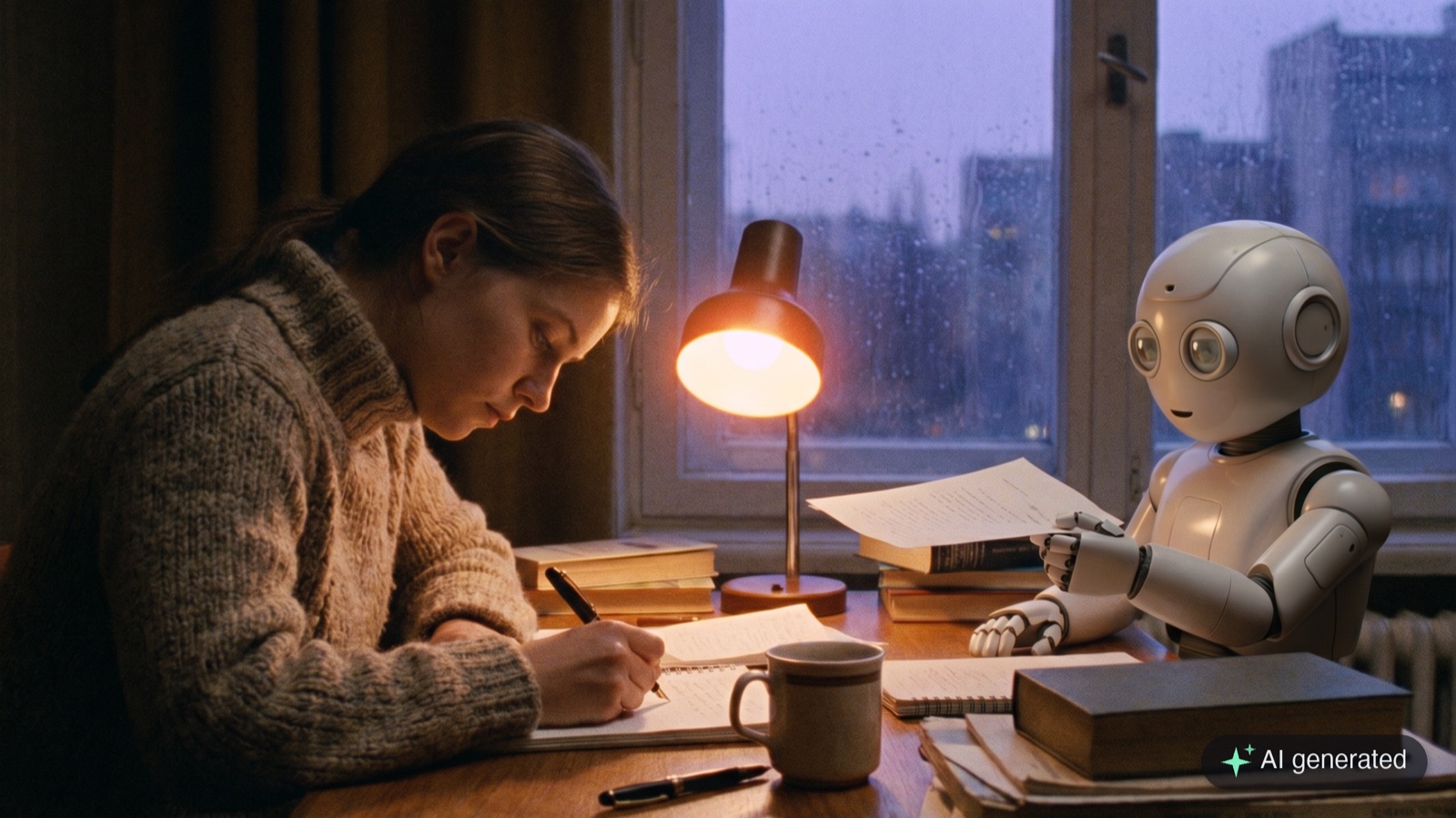
There is a conversation happening right now about AI and writing, and if you write anything with the help of AI, you have probably felt it. The argument goes like this: if AI touched it, it is slop. It is plagiarism. It does not count. You did not really write it.
I have been thinking about this a lot, and I want to offer a different view. Not as a tech guy. As a writer.
Let me start with where I agree, because I agree with more of it than you might expect. If you type a two-line prompt, hit a button, and publish whatever comes out without even reading it, you did not write anything. Click, click, click is not writing. I have said it before on this blog: nobody said writing was easy, and if the whole thing felt easy, you did not do the hard work. That part of the criticism is fair, and anyone who writes with AI should sit with it honestly.
But I do not think that is the whole story. Let me walk through the rest of it.
Influence is how this art form breathes
People say AI is plagiarism because it learned from millions of books. I understand the feeling behind that. But writers have been learning from writers forever, and we have never called it stealing. We called it being inspired.
I am a movie and TV guy more than a book guy, so let me use what I know. Alfred Hitchcock invented camera angles and pacing that directors still use today. You can watch old Twilight Zone episodes and see them borrowing from each other constantly. M. Night Shyamalan is openly inspired by Hitchcock. You can see it in The Sixth Sense, and you can really see it in Servant, which I think is his masterpiece. Is M. Night plagiarizing Hitchcock? Of course not.
Blade Runner was so far ahead of its time that science fiction has been quietly copying its shots for forty years. 2001: A Space Odyssey is locked into the DNA of every space movie since. We do not call any of that theft. We call it the craft passing from one generation to the next.
There is a line often credited to Picasso: good artists copy, great artists steal. Here is the funny part. Even that quote was borrowed. Nobody can prove Picasso said it. The most famous line about creative borrowing was itself passed down, reshaped, and reused. I think that is kind of beautiful.
So when someone says a tool that learned from writing is automatically a plagiarism machine, I just cannot get there. What matters is what comes out the other side, and whether it is yours.
Slop existed long before AI
Here is the other thing. Terrible writing getting published is not an AI invention. Some of the best-selling books of the past few decades were torn apart by critics as awful prose, and readers turned them into global phenomena anyway. Hollywood even made them into movies. Back in the 70s and 80s, plenty of romance novels were dismissed as trash, and millions of readers loved them anyway.
You know who decided? The reader. The reader has always been the judge. Beauty is in the eye of the beholder, and no AI detector changes that. Let the story be judged by the content of the story. That is the only test that has ever mattered.
What this actually looks like when I write
Let me show you what I mean, from my own writing.
I have a story where a young woman named Jessie wakes up in Queens, gets her bicycle, and heads out on her morning food deliveries. She pulls over next to a boy, about twelve, sitting cross-legged on a piece of cardboard, clearly hungry. She gets off the bike, kneels down to his level, and hands him a sandwich. "Stay out of trouble, huh, Joey?" He takes a bite. As she rides off he calls after her: "Thank you, Jessie."
Every choice in that scene is doing work. Kneeling to his level tells you who Jessie is. "Stay out of trouble" is not small talk. It is a foreshadow, because Joey is a street kid, and trouble is coming, and later in the story someone dangerous figures out that the way to hurt Jessie is through Joey.
AI did not build that. AI cannot build that, not the way I mean it. If I asked it to add a foreshadow, it would hand me something flat, something that smells like a formula. The architecture of a story, the reason a character does this now and pays for it later, that is the human part. That is the part I will never hand over.
What AI does for me is different. I write that scene out in plain English, everything I want: the morning light, the cardboard, the sandwich, the exact words they say. Then I format it, and clean screenplay pages come back. And when I read them, my honest reaction is, wow, that is pretty close. That is my scene, exactly my story, just clearer. Sometimes I do not even type. I turn on dictation, talk the scene out loud, take my time, and get real pages back.
And I have noticed something I would offer as a rule to any writer: the more detail you write, the less the AI has to do. Put in the work and the tool has almost nothing to invent. Get lazy and it fills the gaps with its own patterns, and you will feel it. Effort in, ownership kept.
One more line I hold: nothing touches my dialogue. Spell check, fine. I am a horrible speller and I have been leaning on spell check since the 90s, like everyone else, and nobody ever called that cheating. But the words my characters say are mine. That is sacred ground.
So is AI my ghostwriter? No. It is my editor. My co-writer who respects my vibe and my vision. A washing machine did not make us lazy about clean clothes; it freed us up for better things. But I will be fair to the other side here: creativity is not laundry. So ask yourself the real question. Are you writing a story to make a blockbuster, or are you writing a story that becomes one? Those are two different writers. They were two different writers long before AI. The tool just makes the difference show up faster.
School, talent, and everyone in between
Think about music. Some great songwriters were highly educated, trained in theory, maybe even classical players who ended up rock stars. They knew the chords and the structure, and it shows. Others never took a lesson. They listened to a handful of songs, picked up a guitar, and wrote something great on raw talent. Both ways work. Both have always worked.
Writing is the same. If you are studying creative writing in school, that is real, and it should be respected. It will serve you forever. I have an associate's degree in audio engineering, and everything I learned about sound waves and mixing still helps me every time I write music. Education compounds. And as I wrote in an earlier post, when I got serious about screenwriting I did what every writer does: I read Story by Robert McKee. Years later, the things that book taught me are still shaping how I write. That kind of learning should never go away.
But some people do not have those resources. Some kid out there has a whole movie in her head and no seminar, no workshop, no certificate. If an app can be her structure, her first reader, and her craft guide, all in one place, free to start, and she learns by writing and by making mistakes, that is not a threat to writing. That is more writers. And if you did go to school for this, nothing is wasted: you bring everything you learned and start fresh with better tools.
Where I think this is all going
Now let me zoom out for a minute, because I think the bigger picture matters here.
Realistically, going forward, I do not think anything written or created is going to be completely untouched by AI. That is what I envision. AI is becoming a tool inside everything: music, film, writing, design, even the way we engineer and build the things around us. It is here to stay, the same way the camera stayed, the synthesizer stayed, and the word processor stayed.
Once you accept that, the question stops being whether AI touched something. The question becomes how much, where, and whether we are honest about it.
And there is one place where I think the rules genuinely need to be stringent: competition. When work is being judged side by side, the playing field matters. Sculpture already understands this. In sculpting contests there are restrictions on which tools can and cannot be used, because the contest is measuring the sculptor, not the toolbox. Sports understands it too. An athlete who uses steroids or other enhancements has a real advantage over everyone else, so we draw hard lines around it, because the competition is supposed to measure the human. Writing contests, film festivals, and art prizes are all going to need their own version of those lines, clear levels of what was used and what was not. That is fair. Honestly, that is part of taking the craft seriously.
Say what you used, then let the story speak
For everything outside of competition, for the everyday world of stories being shared and read, I believe in disclosure. It should be very clear when AI assisted, and I agree with the critics on that completely. If an image is AI generated, label it. YouTube already does this and it makes sense. And honestly, if a viewer sees the label and still loves the image, that is fine too. The human value survives the label.
But writing needs something smarter than a scarlet letter, because it always comes back to what level of help we are talking about. "AI was used" tells you nothing. Used for what? Spell check? Formatting? Or did it invent your plot? Those are different universes, and one label flattens them into one accusation.
Film already solved this. Story by and written by are different credits, and everyone understands the difference. Writing with AI needs the same kind of honest gradient. Something like: Written by Chris Stevenson. Formatted with Screenplay Assistant. That is a credit I would be proud to print on a title page, because it is simply the truth. Maybe we will be the first to build a real way to certify it. It cannot be our job to police what people do inside a writing app, but it can be our job to make honesty easy.
Because in the end it comes down to honesty in both directions. Do not tell people AI never touched your work when it did. And do not tell a writer who built every beat of her story that she did not write it because a tool formatted her pages.
One last confession, because there is an elephant in the room. Yes: AI helped me write this blog. Every idea in it is mine. I talked these thoughts out and wrote them down the same way I write my scenes, and then I used exactly the kind of help I have been describing all along: cleanup, spelling, order. And here is the part that proves my whole point. I told it not to use em dashes. Go ahead, look. Not one in the entire post.
Why would I even have to do that? And why did I stop using em dashes in my own writing? Not because they are wrong. Writers have loved them for centuries, which is exactly why AI uses them, because it learned from those writers. But somewhere along the way punctuation became evidence, and real human writers with decades of habits are getting accused of being bots over a dash and a list of three.
And think about what that does to reading. If you spent this post scanning for tells, playing is-this-AI-or-not with every sentence, then you were not really hearing what I was trying to say. That is the real cost of the witch hunt. It does not just accuse writers. It stops readers from reading. And that, in itself, is not good.
So let's take it easy, everybody. Write, and be honest about how you wrote. There will always be bad actors, and there will always be slop. There always was, long before any of this. But a witch hunt is not the answer, because the price of a witch hunt is that we stop reading each other.
We named our app Screenplay Assistant on purpose. Assistant. It helps you write your story, and you decide how much help you want, from formatting only to a true creative partner. The words stay yours. The architecture stays yours. The dialogue stays sacred.
And the story gets judged the only way stories have ever been judged: by the person reading it.
Looking forward, Chris Stevenson